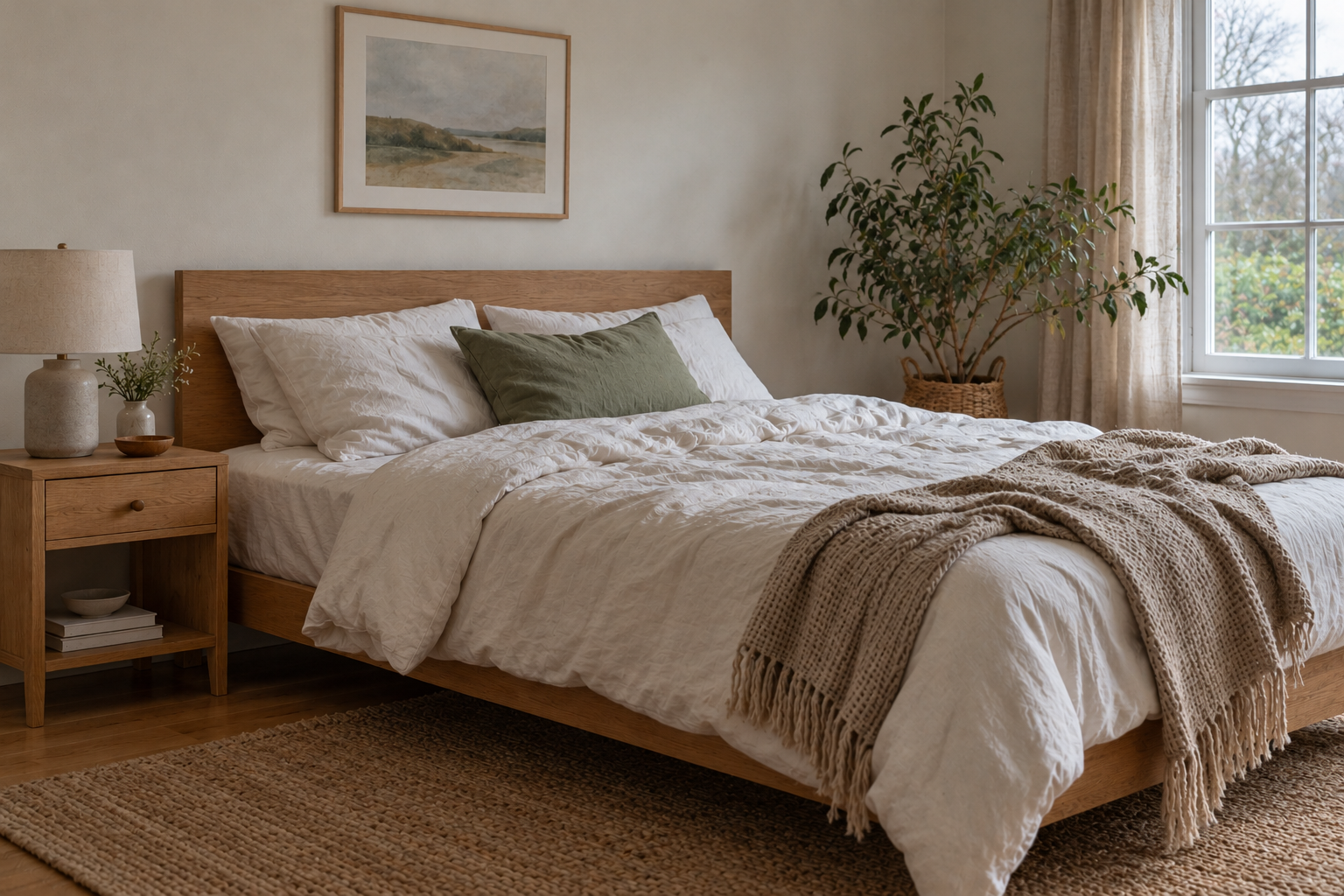
At the end of a long day, I want the bedroom to feel like somewhere I can finally stop. I do not want to walk in and be greeted by bags to return, a pile of clothes, and a nightstand that seems to be running a small administrative office.
A cozy bedroom does not need to look like a hotel or require all-new bedding. It needs a few comforting routines, things you enjoy using, and enough clear space that getting into bed feels like a relief. That is the feeling I would start with.
Make the bed for the person coming back to it
Pull up the sheets, straighten the pillows, and arrange the blanket you actually use. It can take a minute. You are making the room feel welcoming later, not preparing for a white-glove inspection.
Keep the layers manageable. If the decorative pillows make you sigh every night, use fewer. Choose bedding you like the feel of and can care for realistically. If you want a small refresh, try a new pillowcase color, a softer throw, or replacing one worn piece instead of buying an entire new bed setup.
If your bedding does need replacing, cotton percale sheets and a washed-cotton duvet cover are two options to consider, depending on the feel and care you prefer. You do not need both if what you have is still working. Check each size separately: these links open a Full sheet set and a Queen duvet-cover option. The cover does not include a duvet insert.
Build the nightstand around your nighttime routine
Think through what you reach for: a light, your current book, hand cream, glasses, a drink. Give those things a small, uncluttered home. A little tray or a drawer divider can keep essentials together without putting every bottle you own on display.
Only the nighttime items get this spot. Receipts, school papers, spare chargers, and the project you keep meaning to start can live elsewhere. The table beside the bed should help you wind down, not remind you of every unfinished task.
Leave a clear place to set something down. Keep charging equipment appropriately ventilated and cords out of your walking path. A useful lamp is worth more here than another decorative object you have to move around.
Clear the area around the bed
Give laundry a destination and move shoes out of the route you take when the lights are off. Clean the floor and the reachable space around the bed regularly, using methods suitable for your flooring and furniture.
If the room is overwhelmed, start with the side where you get in. Clear that path, then the nightstand, then the end of the bed. You do not have to reorganize the wardrobe before you are allowed to enjoy the room tonight.
Make the evening transition repeatable
Close the curtains, turn on the bedside lamp, and put tomorrow's essential items somewhere useful outside your resting space. Choose a short sequence that signals the day is winding down. It does not have to become another elaborate routine to complete correctly.
Notice what makes the room feel good to you: a particular blanket, softer light, a favorite photograph, or simply fewer things in view. Build around that. A bedroom can be attractive and still feel personal, rather than having the slightly impersonal calm of a room nobody has ever slept in.
The secret is preserving the bed as a place of comfort instead of letting it become the household's spare sorting surface. Some nights the rest of the house will still be a lot. It is lovely to have one room that asks a little less of you.