Growing up in Oregon, I used to garden with my mom and my aunt. They would explain annuals and perennials as we worked our way through the nursery, choosing different varieties, including some that would only last a few months. Then we would do it all again the next year.
I imagined that, as an adult, I would have the same passion for spending countless early-spring Saturdays at the nursery. It has happened from time to time. But these days, in my more moderate California climate, where growing can be easier, my available time and patience have gone in the opposite direction.
I still want the garden to feel lush and considered. I just need an approach I can realistically keep up with. Here is the balance I am aiming for now.
Start smaller than the nursery makes you want to
Choose one bed or a few containers and learn those spaces before expanding. Watch the light, notice drainage, and work out how you will water. The sunny-looking corner at noon may spend the rest of the day in shade.
Group plants with similar needs and choose containers with appropriate drainage. Use a growing medium suited to the plant and the container. A small area that is doing well is much more satisfying than several beds asking for attention you do not have.
Buy local, and ask specific questions
A local nursery can help you find plants suited to your actual climate and conditions. Bring photos, sun observations, and measurements. Ask about mature size, water needs, seasonal appearance, and care rather than only how pretty something looks that morning.
Mention pets and children so you can check suitability for your household. Ask which plants will provide lasting structure and which will need regular replacing. I still appreciate seasonal flowers; I simply want to choose that extra work deliberately.
Plan fruit trees before bringing them home
If, like me, you are drawn to the idea of fruit trees, pause before choosing the prettiest one in the row. Check your space, local conditions, the mature size, and the variety's pollination requirements.
Some fruit trees are self-fruitful. Others need a compatible second variety flowering at the right time. Buying two of the same tree is not automatically the answer. Ask the nursery to help select an appropriate pairing where one is needed, and consider locally suitable flowering plants that support visiting pollinators.
UC Agriculture and Natural Resources has a useful fruit-tree selection checklist covering those choices. I would rather spend time asking the questions now than spend years wondering why a very handsome tree is not producing fruit.
Let the lower beds ask a little less
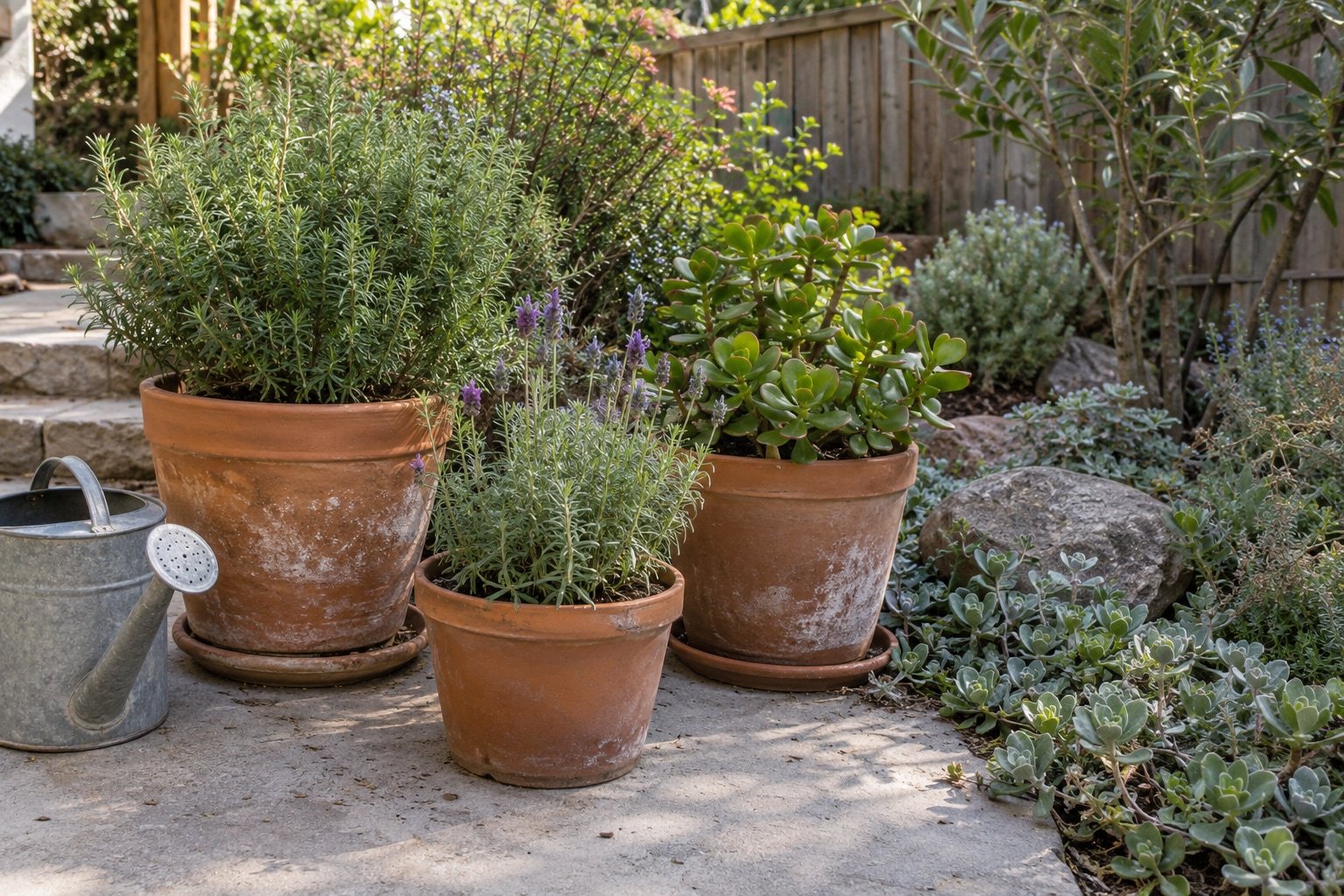
For my California space, succulents and locally appropriate, drought-tolerant plants are a practical starting point. Choose for your particular exposure and conditions rather than assuming every succulent belongs in every spot. New plants still need an establishment plan; lower-water does not mean no attention.
Repeat a few compatible plants instead of choosing one of everything. That can help the planting feel more considered and make care simpler. Leave enough space for mature growth rather than trying to make a newly planted bed look finished immediately.
Keep a little room for the fun part
I do not need to recreate my mom and aunt's gardening routine exactly to keep the part I loved. I can enjoy choosing a few plants, notice new growth, and build something slowly.
This version may involve fewer nursery Saturdays and more forgiving plants. That is fine. The garden should feel like an invitation to step outside, not another place where I am behind.