Before I start packing, I am trying to ask a more useful question than “What could we possibly need?” That question has no reasonable end. I could pack most of the house and still think of something while we were backing out of the driveway.
The better question is: where are we going? If we are camping somewhere remote, I am making a list and checking it twice. If we are going away for two days somewhere with ordinary stores, I am learning to remind myself that we can stop at the drugstore if I forget a replaceable toiletry. I do not need the entire contents of the medicine cabinet to feel prepared.
Match the list to the actual trip
Check the length of the stay, the forecast, what you plan to do, and what is available where you are staying. Confirm important arrangements, especially sleeping setups and equipment you are relying on. Pack for those facts rather than every possible version of the weekend.
Keep essential medication, necessary documents, and items that cannot be easily replaced on a separate must-pack list. The permission to buy a forgotten toothbrush does not apply to things that are important to your health, access, or travel arrangements.
For remote trips, limited store access, or specific dietary and care needs, plan more carefully. “We can pick it up there” is useful when it is true, not when it is just something you would like to be true.
Choose clothes that work together
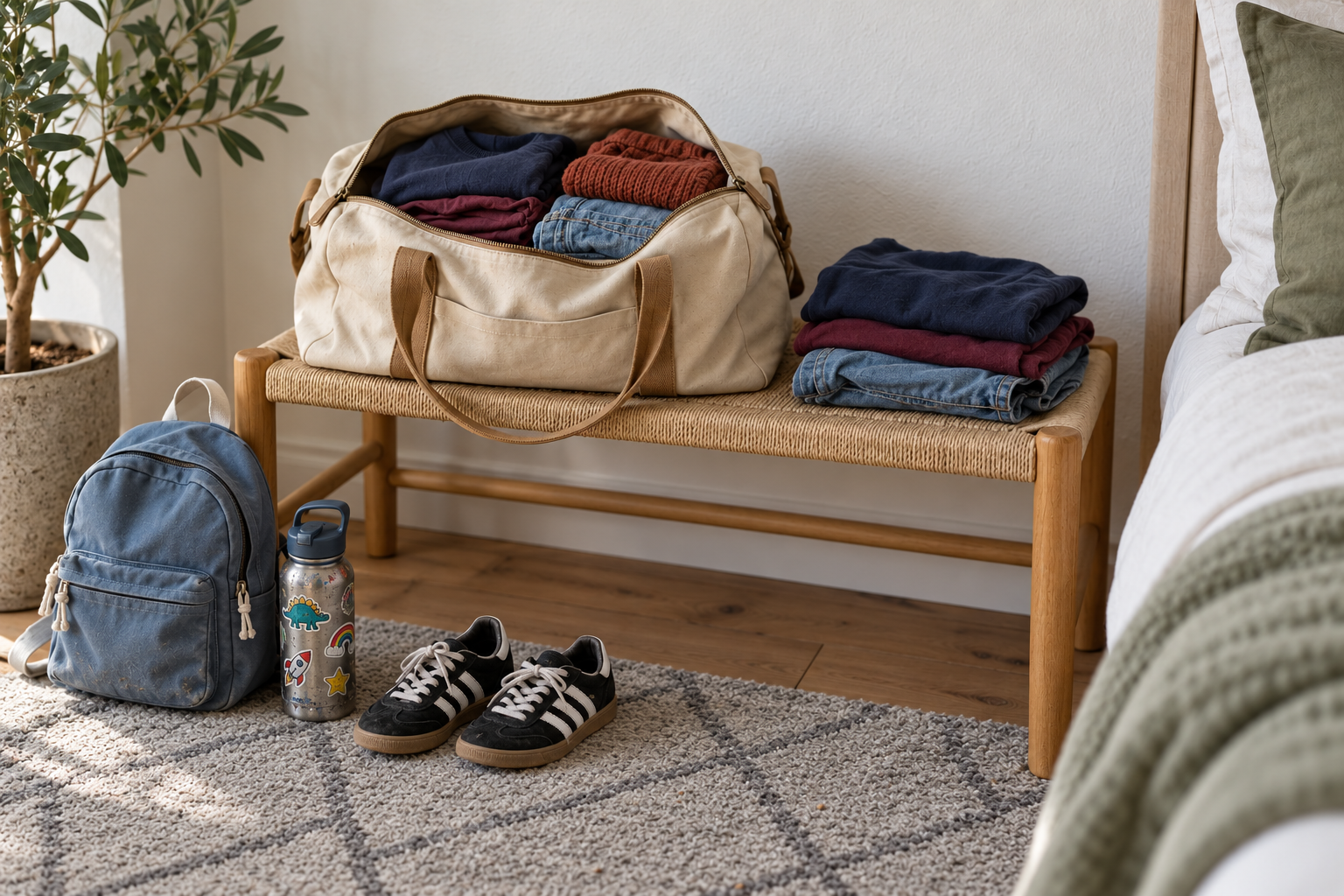
Lay out outfits for the actual activities. Choose layers and shoes that make sense for the weather and the walking you expect to do. Add practical spares for the household, then pause before putting in another entirely different outfit just in case.
Give each person an identifiable section or bag. Let kids help at a level that suits their ages, and check the essentials together. The trip gets easier when packing is a shared job rather than one person quietly predicting everyone's future needs.
Keep the journey essentials reachable
Put water, suitable snacks, a few useful supplies, and whatever entertainment you need in a manageable travel bag. Keep essentials accessible instead of burying them beneath the suitcase you will not open until arrival.
Choose a few familiar activities rather than bringing every option. A bag you can actually carry comfortably will be more useful than the theoretical answer to every minute of boredom.
Leave the house pleasant, not perfect
Nobody wants to come home to a dirty house. Put food away, take out the trash as needed, deal with the obvious dishes, and follow your usual home security and household arrangements. If there is time, clear the main kitchen surface and give yourself a clean place to land.
But do not turn departure into a deadline for every cleaning task you have noticed all month. An unsorted drawer can wait. So can the project that suddenly seems urgent because you are about to leave it.
Keep a better list for next time
After the weekend, note what you truly missed and what came home unused. Keep that in your phone so the next trip begins with a helpful list instead of a fresh round of guessing.
I want to arrive prepared enough to enjoy the weekend, not exhausted from trying to prevent every minor inconvenience. Sometimes the calmer choice is remembering that a forgotten ordinary item is a quick stop, not a ruined trip.