The front door opens and the house gains two bags, two water bottles, a large zipper binder, an instrument, shoes tossed aside, enough noise to rival a heavy metal concert, and a ransacked pantry. That is the first five minutes.
This is not the moment for a complicated system or an inspiring speech about responsibility. Everyone is arriving with their own version of the day, and at least one person needs food immediately. I want a routine that takes a little of the pressure off all of us.
Give the big things an obvious first stop
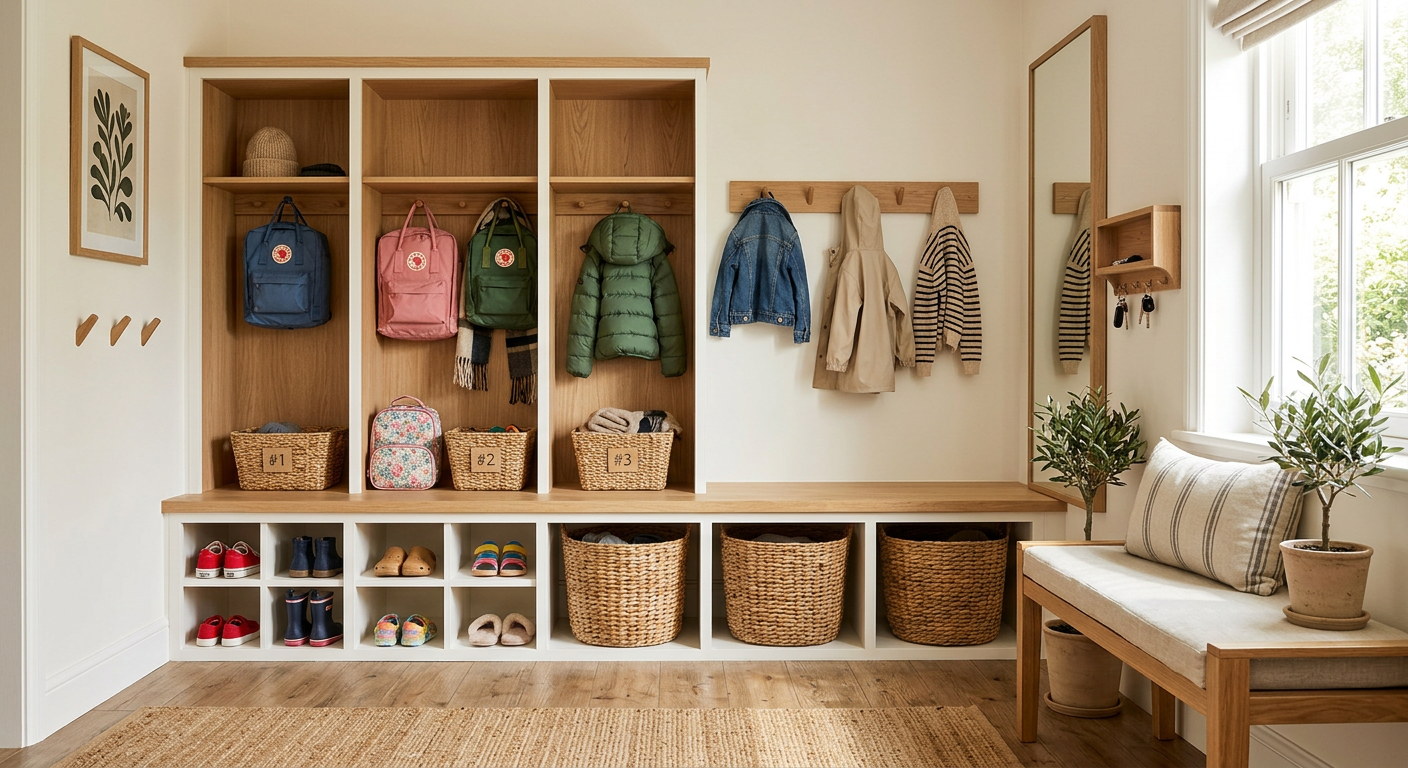
Choose a practical spot for bags, binders, and the instrument before they spread through the room. It does not have to be a built-in mudroom. Accessible hooks, a shelf, or a sturdy basket can help, provided the storage suits the weight and keeps doors and walking routes clear.
Decide what should stay in a case and what can be hung or put on a shelf. Make each person's place easy to identify. If something is repeatedly landing beside its assigned spot, check whether the spot is actually convenient before assuming nobody is trying.
Empty the things that need attention today
Lunch containers, water bottles, and damp clothes get their next destination right away. Keep the instructions short and repeatable. A routine everyone can remember is more useful than a beautiful list with fourteen steps.
Build in a little age-appropriate independence. Kids can bring containers to the kitchen and put shoes in the right place even if an adult still needs to help with other parts. One person should not have to unpack everyone's day while also supplying snacks.
Give the pantry rush a plan
Have a predictable place for suitable after-school snacks and agree on what needs asking first. The goal is not to make hungry children less hungry; it is to prevent the first snack search from emptying half the cupboard onto the counter.
Make water and a place to sit easy to find. If somebody needs a quiet minute before talking, leave room for that too. The day may have been full long before everyone arrived home.
Catch the paper once
Give forms and things needing an adult's attention one small tray. Review it at a regular time, add deadlines to your calendar, and then file, recycle, or act. The binder can go back to its home rather than living open on the table until tomorrow.
Keep this category limited. Art, homework, permission slips, and general school information do not all need the same long-term destination. The tray is where you decide, not where everything stays.
Start with one habit
This week, begin with bags and containers. Add the next part when that feels familiar. It will still take reminders, especially when the household arrives at heavy-metal volume.
The point is not a silent, immaculate entryway. It is getting through the first five minutes with fewer things abandoned, less for you to remember, and enough room to hear what everyone wants to tell you once the snack situation has settled.