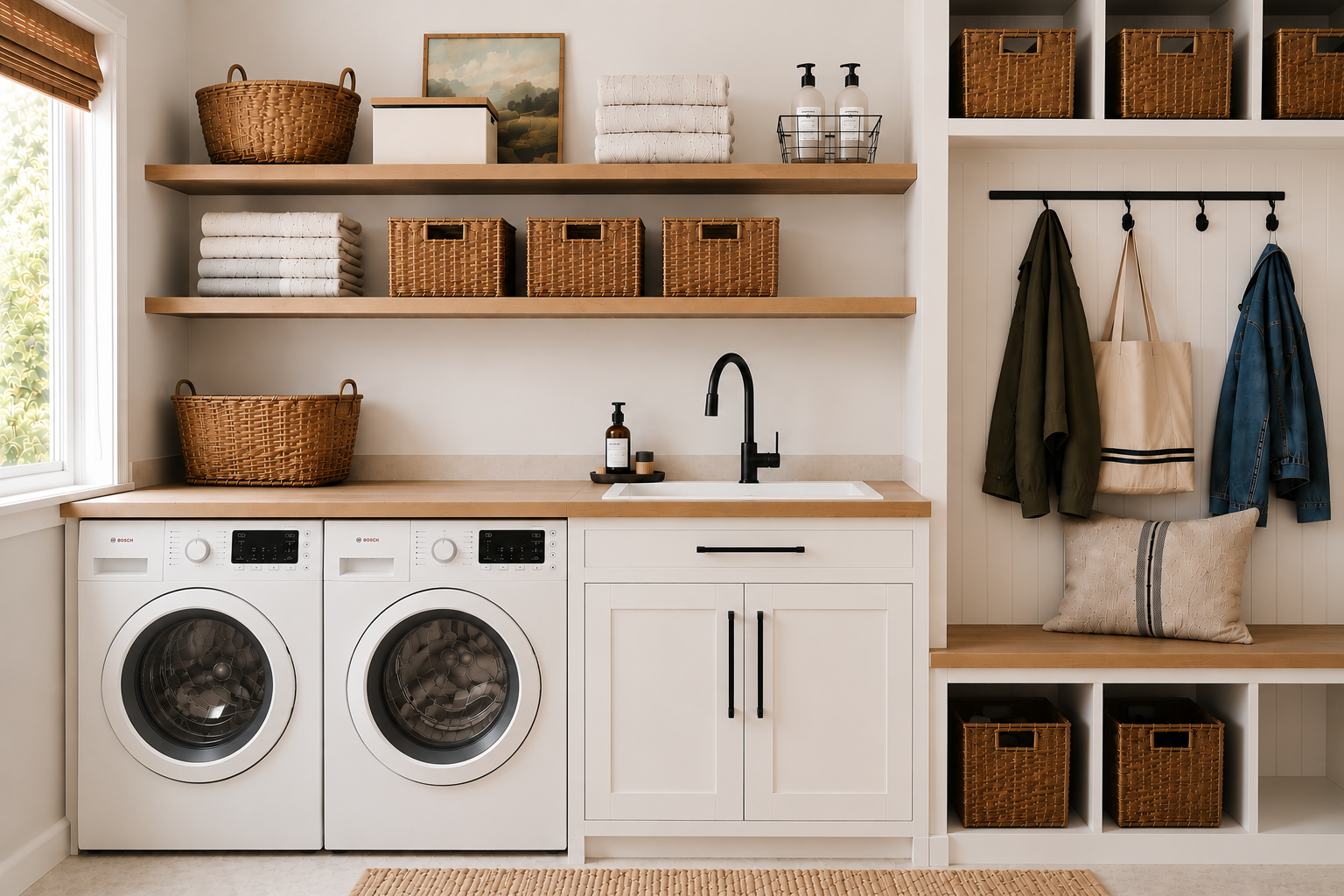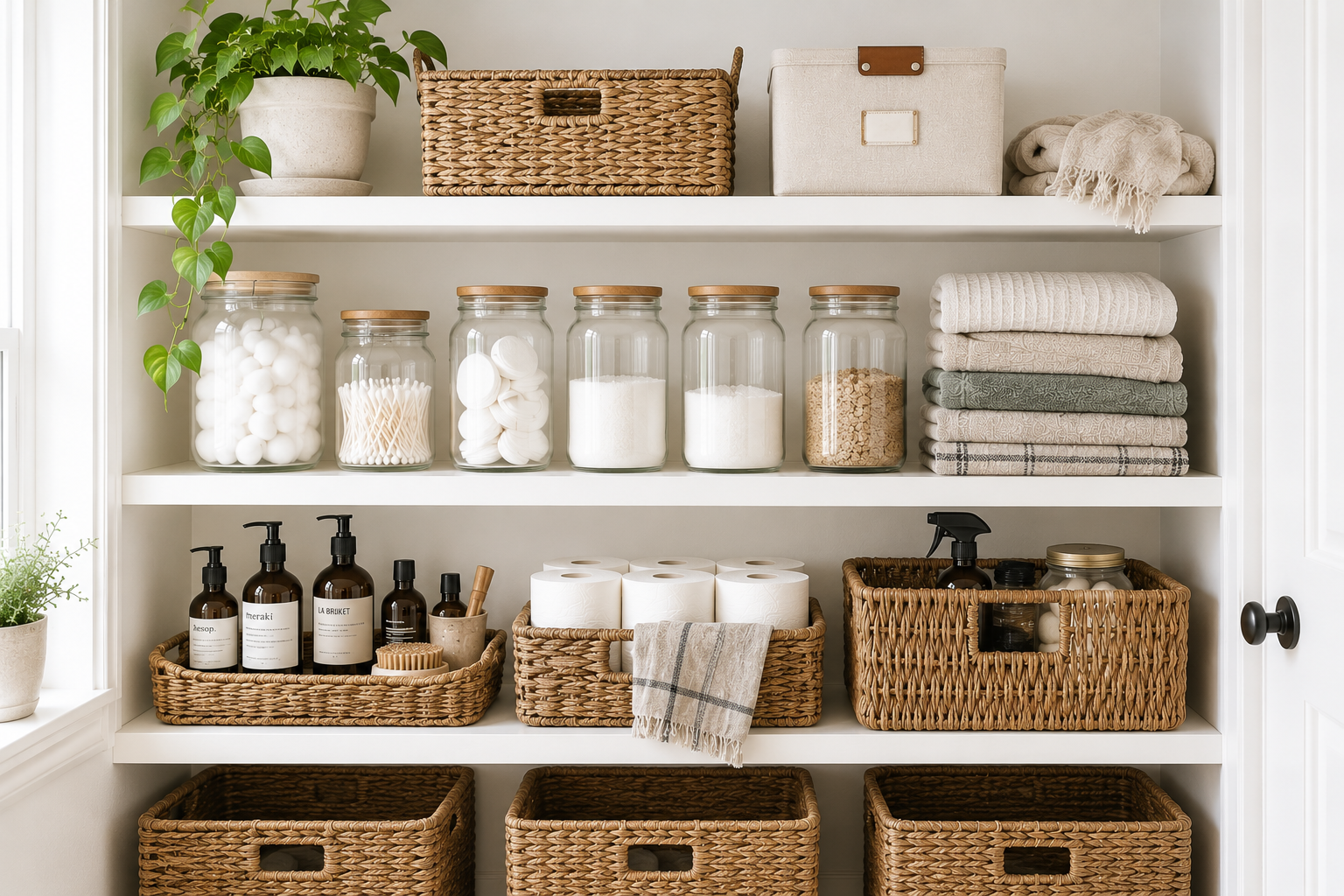
You know that moment when you are standing in the storage aisle, holding a basket, and trying to remember the size of a shelf you have walked past approximately twelve thousand times? Suddenly all you know is that the shelf is a rectangle. The basket is also a rectangle. This feels promising, but it is not quite a measurement.
Storage gets much easier when you choose it after deciding what needs a home. Otherwise you can end up with a lovely container, the original pile, and a new problem: finding somewhere to put the container.
Start with one drawer, shelf, or pile
Choose a small area you can finish. Take the contents out, clean as appropriate, and decide what actually belongs there. Return unrelated things to their proper rooms. Pass on or dispose of items responsibly where suitable.
Group the keepers by how you use them. Hair supplies together. Charging equipment together. Lunch containers with the lids you can actually match. You do not need a complicated classification system for a drawer of everyday tools.
Measure the space and the things
Record the inside width, depth, and height. Notice hinges, pipes, shelf supports, and the room needed to pull the container out. Check how far a drawer opens. A basket that fits beautifully but cannot be removed is less useful than it first appears.
Measure the largest item you need to store, too. Look at an organizer's internal dimensions, not just its outside size. Thick sides, rounded corners, and dividers all reduce the usable space. Photograph the measurements or put them in your phone before shopping.
Test the location with something you own
Use a spare box, bowl, or tray for a few days. Can the people who need the items reach them? Does the lid make returning things annoying? Are you moving two other containers every time you want the one at the back?
Everyday things need easy access. Occasional things can go farther back. If a temporary setup does not get used, change the location or the process before buying a prettier version of it.
Choose storage you can maintain
Think about moisture, cleaning, weight, and the material's suitability for the location. Choose appropriate storage for children and secure furniture where required. Keep hazardous items in suitable secure storage rather than treating a decorative basket as protection.
Leave a little space inside the container so returning things is easy. Use simple labels if they help the household. “Cables” is useful; a perfectly lettered system nobody understands is mostly a craft project.
Revisit the contents before adding another bin
When the container fills, take a look at what has changed. Are there duplicates? Things nobody uses? Items that belong somewhere else? Another bin may be the answer, but it should not be the automatic answer.
Start with a drawer that closes and things you can find. That is a real improvement. You can enjoy it for a while before deciding that every cupboard in the house needs matching baskets.