In my husband's mind, being organized means having a clean garage. I wholeheartedly disagree. A tidier garage would absolutely feel good, and I would enjoy being able to find everything in there. But the spaces I see and live in every day are the ones that affect how the house feels to me.
The kitchen counter, the living room, the place we drop our bags: those are the areas I want to work on first. If they are constantly asking for attention, a beautifully arranged garage shelf does not quite settle it for me.
I think organization earns its place by making ordinary life easier. It should reduce the number of things you have to look for, step over, or remember. It does not have to look particularly impressive while doing it.
Start where the day keeps getting stuck
Choose one recurring irritation. Maybe everyone is searching for chargers, school forms disappear, or the shoes land exactly where the door needs to open. Notice what happens for a few days before deciding how to fix it.
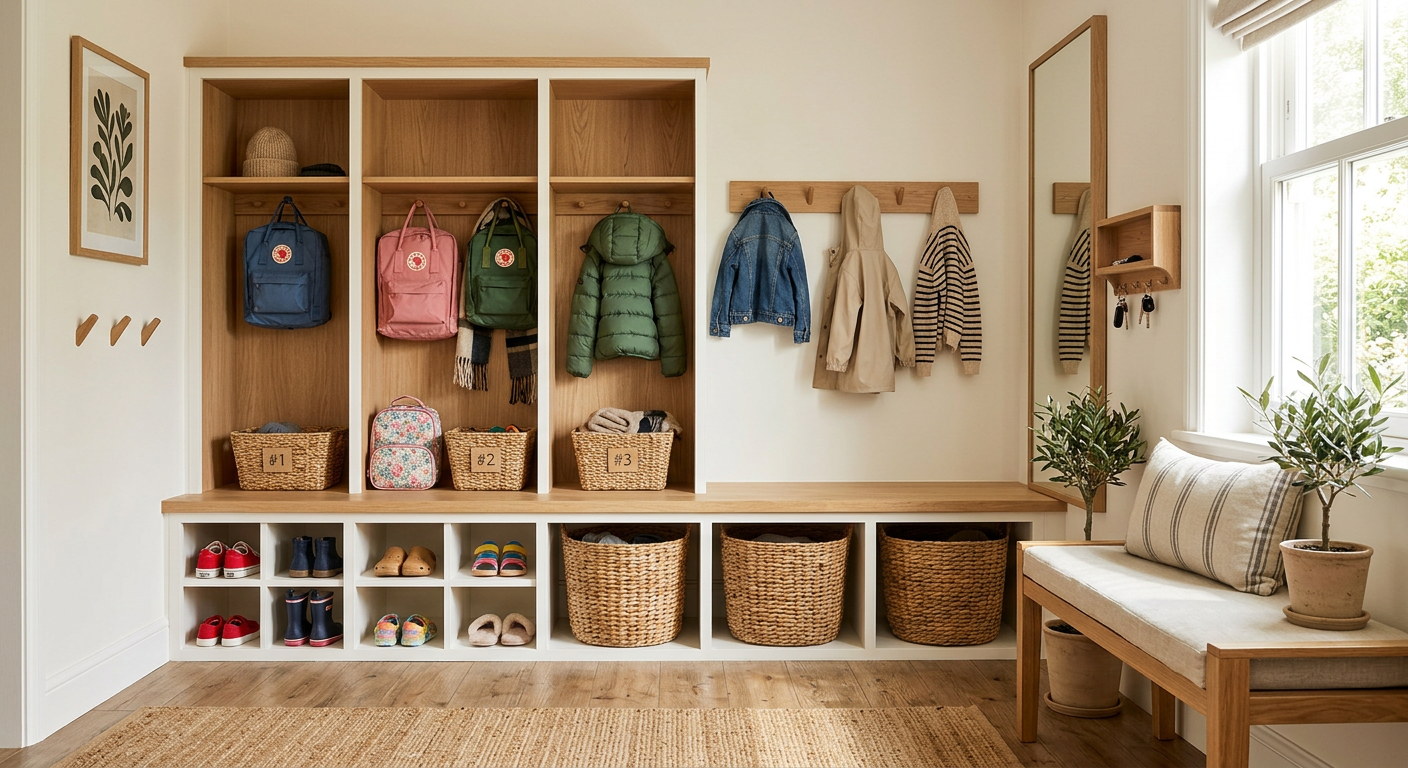
Put the solution near the existing habit. If bags land by the back door, try a sensible landing spot there rather than expecting everyone to carry them past it into a room they do not use. Make sure the arrangement leaves access clear and the storage is stable and appropriate for its load.
Start small enough to tell whether the change helps. You do not need to organize the entire entryway to discover that one reachable hook is useful.
Make putting away the easier option
Give frequently used things the convenient spaces. Save the top shelf and the harder-to-reach cupboard for occasional items. Use broad categories that people understand: school supplies, hair things, games, or the charging cables that are actually in use.
For a clothing drawer, a fabric drawer organizer set is one way to give socks and small items defined spaces. Measure the drawer and the individual bins before choosing a set. This option is a fifteen-piece pack, so consider whether you have a use for that many pieces. A few containers you already own may do the job just as well.
For children's everyday items, choose a system that fits their abilities. If they have to move three things, match a particular lid, and reach behind something fragile, the system is making an ambitious request. A simple open bin may work better.
Try the setup with a spare container before shopping. Watch whether things go back. If they do not, change the location, the lid, or the size before deciding that everyone needs a speech about cooperation.
Share the five-minute reset
A short daily pickup helps prevent small things from becoming an entire weekend's job. Set a timer, give people clear tasks, and have everyone return things to their homes. Laundry leaves the living room. Cups go to the kitchen. School items go to the landing spot.
I often use the rule that screen time starts after the five-minute cleanup. It gives the reset a predictable moment in the day, and the incentive is much more effective than announcing vaguely that we should all try to be tidier.
When everyone contributes, it really can be five minutes. When one person does all the noticing, collecting, and returning, it becomes something else. The routine should share both the work and the knowledge of where things belong.
Give the weekly basket a finish line
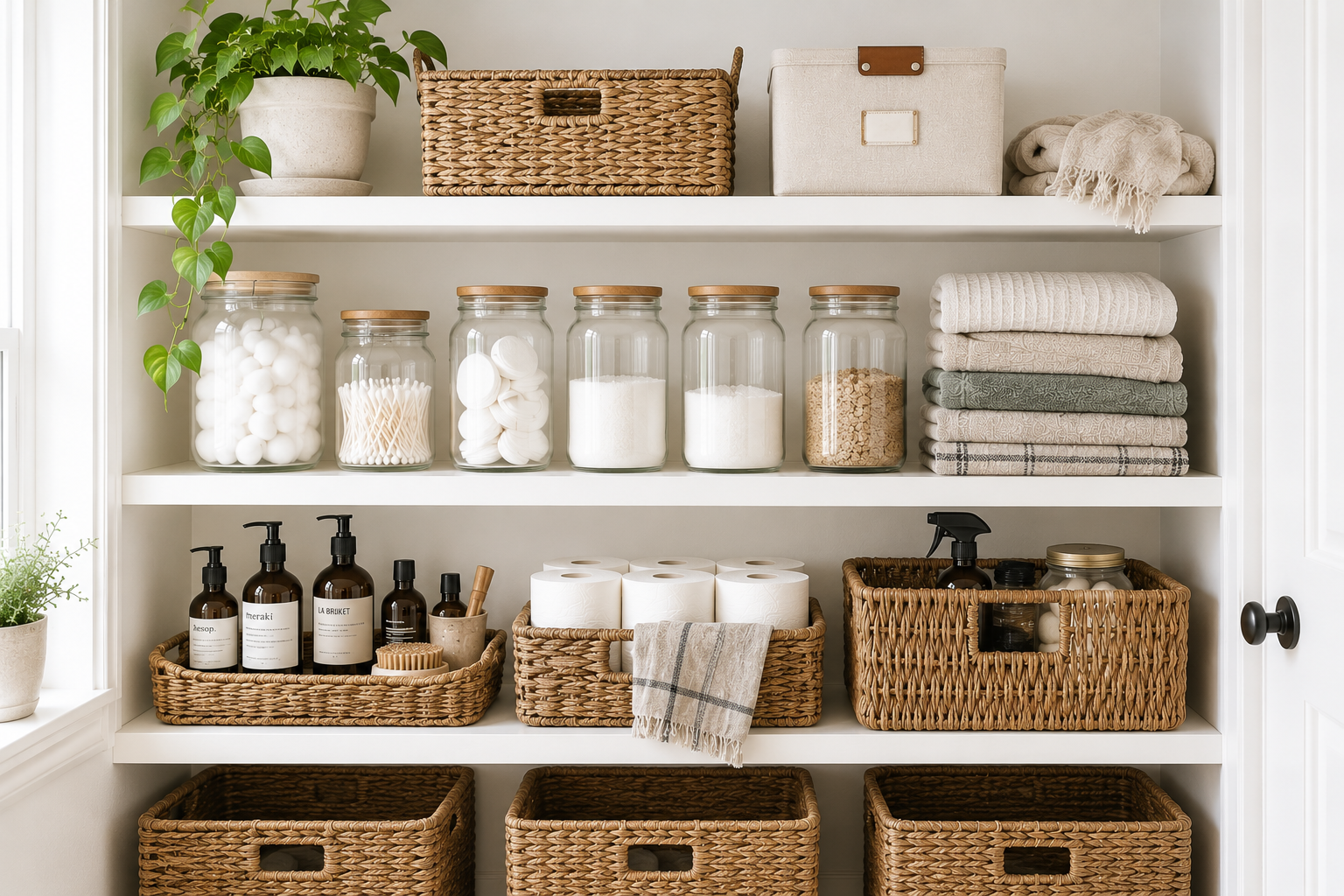
Once a week, use a basket to collect the things that have wandered into the wrong rooms. Take them back, then empty the basket completely. This is a useful second pass for the things the quick daily reset misses.
If a particular category keeps overflowing, sort the contents before adding another container. There may be duplicates, things you no longer use, or items that need a different home. Buying more storage is not always the same as getting organized.
Keep the working system, even if it is not beautiful yet
A plain tray that catches the important papers is a success. So is a drawer where everyone can find the scissors. You can make those spaces prettier later if you want to, after you know the arrangement works.
Choose the fix that makes the next ordinary day easier. The garage can have its turn too. I simply want the room I walk into six times before breakfast to feel a little less demanding first.