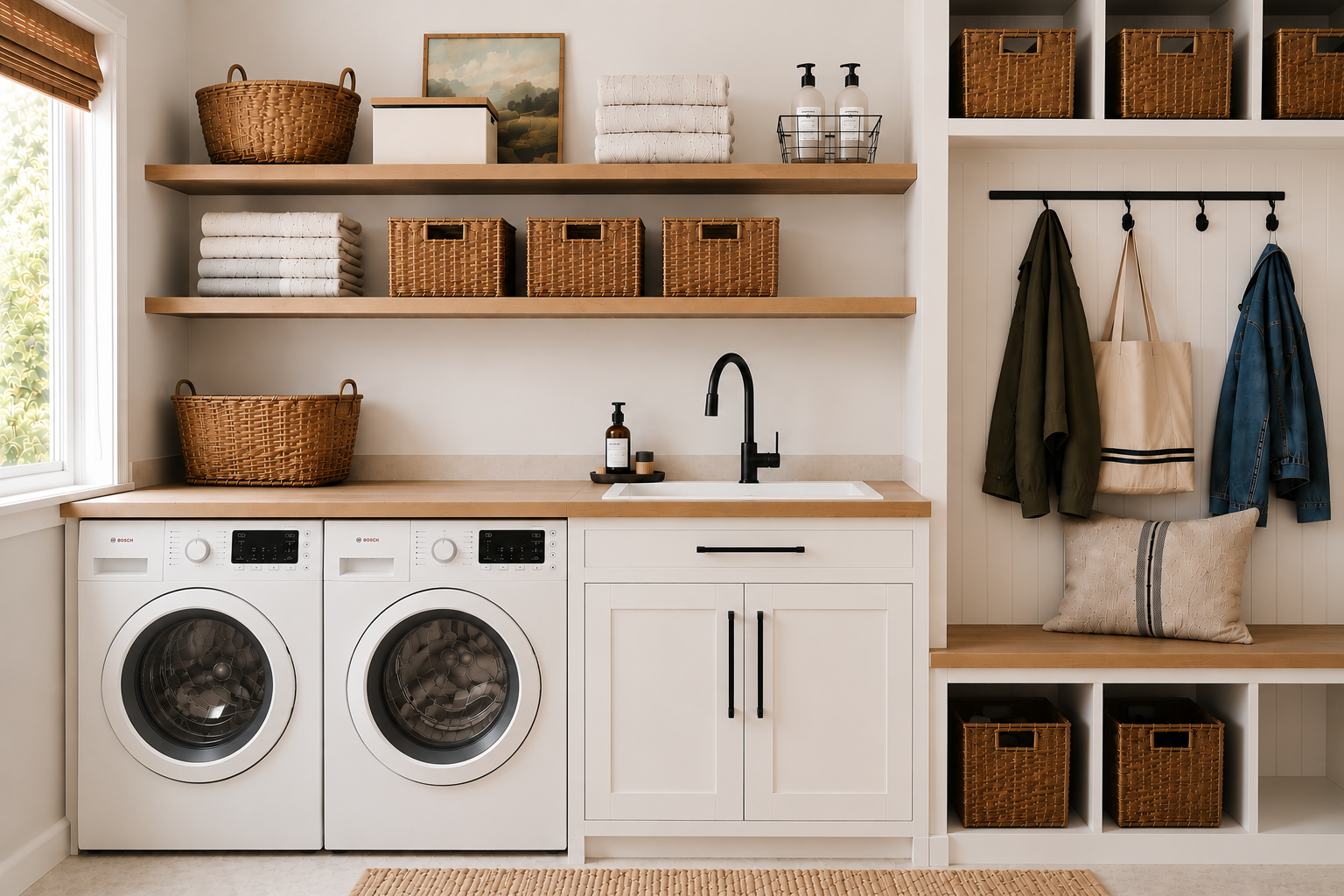
If you are lucky enough to have a laundry room, wonderful. If your laundry happens in a closet, the garage, a shared space, or somewhere that also performs three other household jobs, you still deserve a process that works.
The room is not the starting point. The clothes are. Where do they land, when do they need washing, and how do they get back to the people who wear them? As I write this, there are clean, unfolded clothes on my couch. I am very interested in improvements that survive contact with an actual family.
Step 1: Follow the clothes
Notice where dirty clothes accumulate: bedrooms, bathrooms, the gym bag, that spot where sports equipment gets dropped. Put a practical collection point where it will be used, and agree on what goes there. Damp things need appropriate handling and should not sit forgotten in a closed bag.
Most importantly, establish a clear distinction between clean and dirty. If I have to pick up another spare sock and play that game, I may scream. A designated hamper and a designated clean-clothes spot save more time than a very beautiful sign saying Laundry.
Step 2: Build a schedule around your actual week
Look at sports, gym clothes, school needs, towels, and the days you are home. You might assign whites to Monday and mixed loads to Tuesday, sorting and washing according to fabric care labels. Or you might need one load most days. It certainly feels that way in my house.
The right schedule gets the needed clothes ready without taking over the day. If a uniform is needed on Wednesday, its wash cannot be a Thursday aspiration. Work backward from the real deadlines rather than choosing a routine because it looks tidy on paper.
Step 3: Give each load a destination
Use a basket for each person or a clear section for each room. Keep clean clothes separate from incoming laundry. If you cannot fold a load immediately, contain it somewhere clean and dry rather than spreading it across every available seat.
Pick a realistic time to put things away. Ten minutes after dinner may work better than waiting for a magical quiet afternoon. There is no rule that says every load needs to be folded in one uninterrupted session.
Step 4: Make it a team effort
Divide the jobs by age and ability: bringing hampers, emptying pockets, matching socks, folding simple items, or putting clothes in drawers. Explain the actual finish line. Transporting clean clothes from the couch to a bedroom floor is a location change, not quite putting them away.
One person should not have to locate every sock, remember every practice, and announce every step. A short visible schedule can help the household see what needs doing without waiting to be asked.
Step 5: Reset the space after the process works
If you have a laundry room, protect the surface needed for sorting or folding. If you do not, choose a temporary work area that can be cleared when you finish. Store laundry products in their original containers, secured appropriately, and keep appliance access and ventilation clear.
Finally, do not let the laundry area become a junk holder simply because it is already a working space. Returns, old decorations, and unrelated projects need another destination. The laundry has enough to do. So do we.