Keeping a living room completely clutter-free is nearly impossible, at least if you plan to live in it. People bring things in. They sit down, take off a sweatshirt, start a game, abandon a book, and move on to the next part of the day. The room collects evidence.
I still want ours to feel warm and pulled together. I just do not want to spend the evening following everyone around, removing the signs that they were there. The answer, for me, is a combination of useful places to put things and a short routine for getting them back there.
Before buying another piece of furniture or storage, I would start with what keeps turning up in the room. That tells you much more than a photograph of a perfectly styled space.
Give the regular visitors a real home
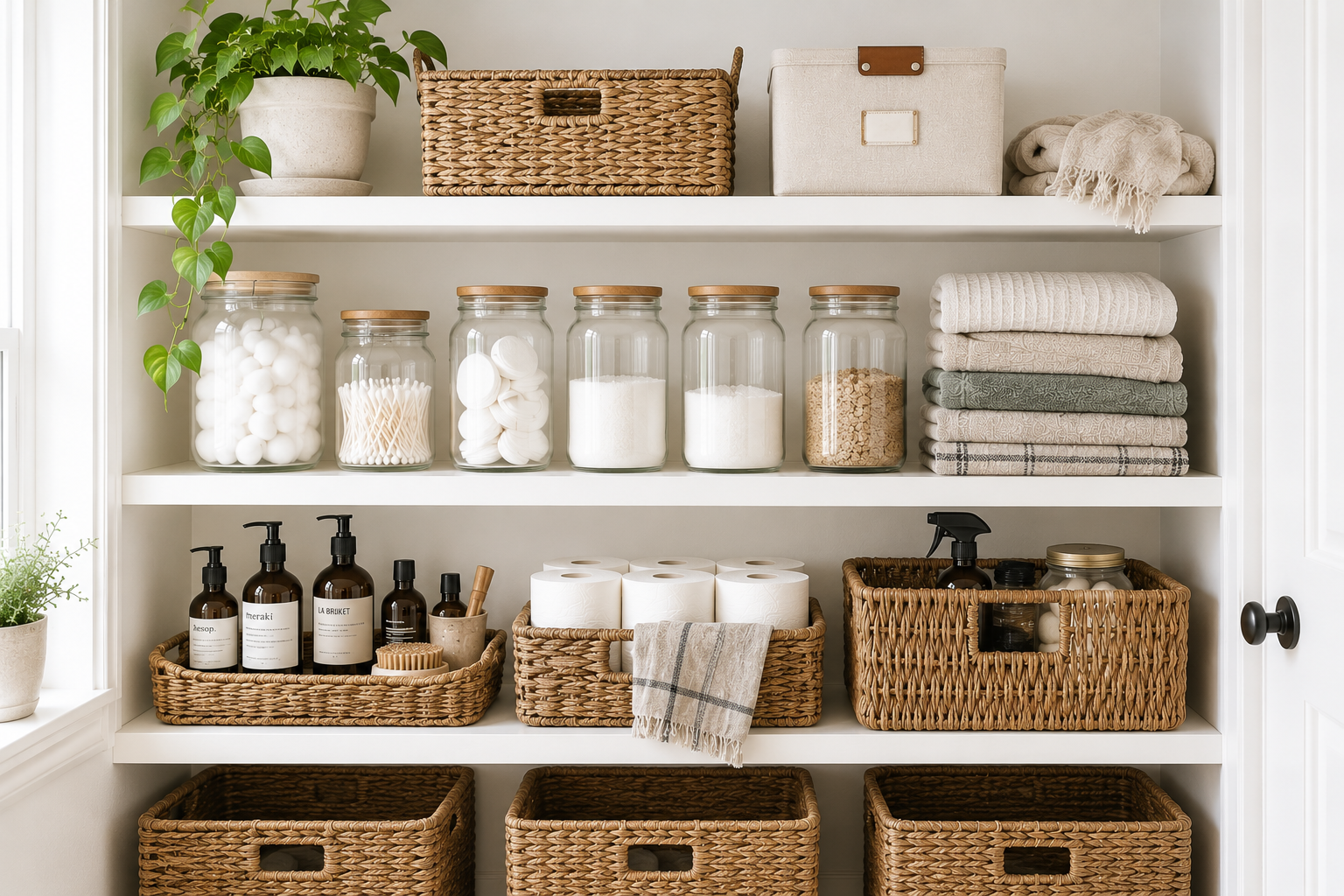
Blankets, remotes, chargers, games, and everyday toys need somewhere convenient to go. A basket beside the sofa can hold throws. A shallow bowl can hold the remote. A low shelf or a simple bin can keep the games people actually use within reach.
Choose storage that suits the task. An open basket is easier for a blanket than a box underneath several other boxes. A drawer is useful for small things if it has a little structure inside. Keep hazardous items and small accessories secured appropriately from children and pets.
The goal is that anyone can put something away without asking where it belongs. If the answer depends on your private knowledge of the household, simplify it. A system only one person understands is another job for that person.
Make room for the life the furniture serves
Sit in the usual seats. Can people set down a drink? Reach a light? Walk through without stepping over a basket? Move a small table or lamp before deciding the room needs replacing.
Keep the main route clear and put useful surfaces where people actually need them. A sofa arm will become a temporary table if there is no better option. That is helpful information about the layout, even if the mug ring is less welcome.
Use a Sunday basket to return the wanderers
Once a week, take a basket through the room and gather things that belong somewhere else: laundry, school items, a stray shoe, whatever has migrated in. Then deliver them to their actual homes. The second part is important. Otherwise you have simply created a very organized basket of unfinished work.
This is also a chance to notice what keeps returning. If the same item appears every week, maybe it needs a more convenient home or a clearer household habit. Repeated clutter often points to a practical problem rather than a lack of willpower.
Keep the daily pickup short
A five-minute family cleanup can make a surprisingly big difference when everyone helps. Gather the dishes, return the small items, move laundry to its proper place, and put the blankets back. It stays manageable because you are dealing with a day, not a month.
I often make screen time the thing that happens after the five-minute cleanup. It gives the job a clear place in the evening instead of leaving it for the person who is most bothered by the mess. Keep the instructions specific so everyone can contribute rather than standing around waiting for a task.
Spend where it solves a clear problem
Try an existing basket, tray, or box before buying a new version. Measure the space and live with the temporary arrangement. If it works, you may already own the answer. If it does not, you have learned something before spending money.
For a warmer look, use a few materials that relate to what you have: wood, a soft throw, a cushion cover in a color you love, and comfortable evening light. A small repair or a better arrangement can do more than another collection of decorative objects.
The room will get messy again. That does not mean the system failed. Success is being able to put it back reasonably quickly, then sit down and enjoy it. A living room should make room for your family, including the version of your family that cannot remember where it left a sweatshirt.