The phrase “make your home look expensive” can send a perfectly sensible person into a late-night search for enormous lamps. I understand the appeal. But what I am usually admiring in a beautiful room is its sense of proportion and calm, not an invisible price tag.
These are the changes I would try before replacing furniture. Start with one. A ten-point list is a menu, not a summons.
1. Clear one surface
Take everything off a side table and return the lamp, one useful object, and perhaps something personal. Leave the rest off for a day. Empty space lets the things you like register; it also gives your mug somewhere to land.
2. Move the furniture a little
Check the main walkway and the conversation area. Try turning a chair toward the sofa or pulling a piece slightly from the wall if space allows. Measure before buying a replacement for a layout problem.
3. Give curtains room
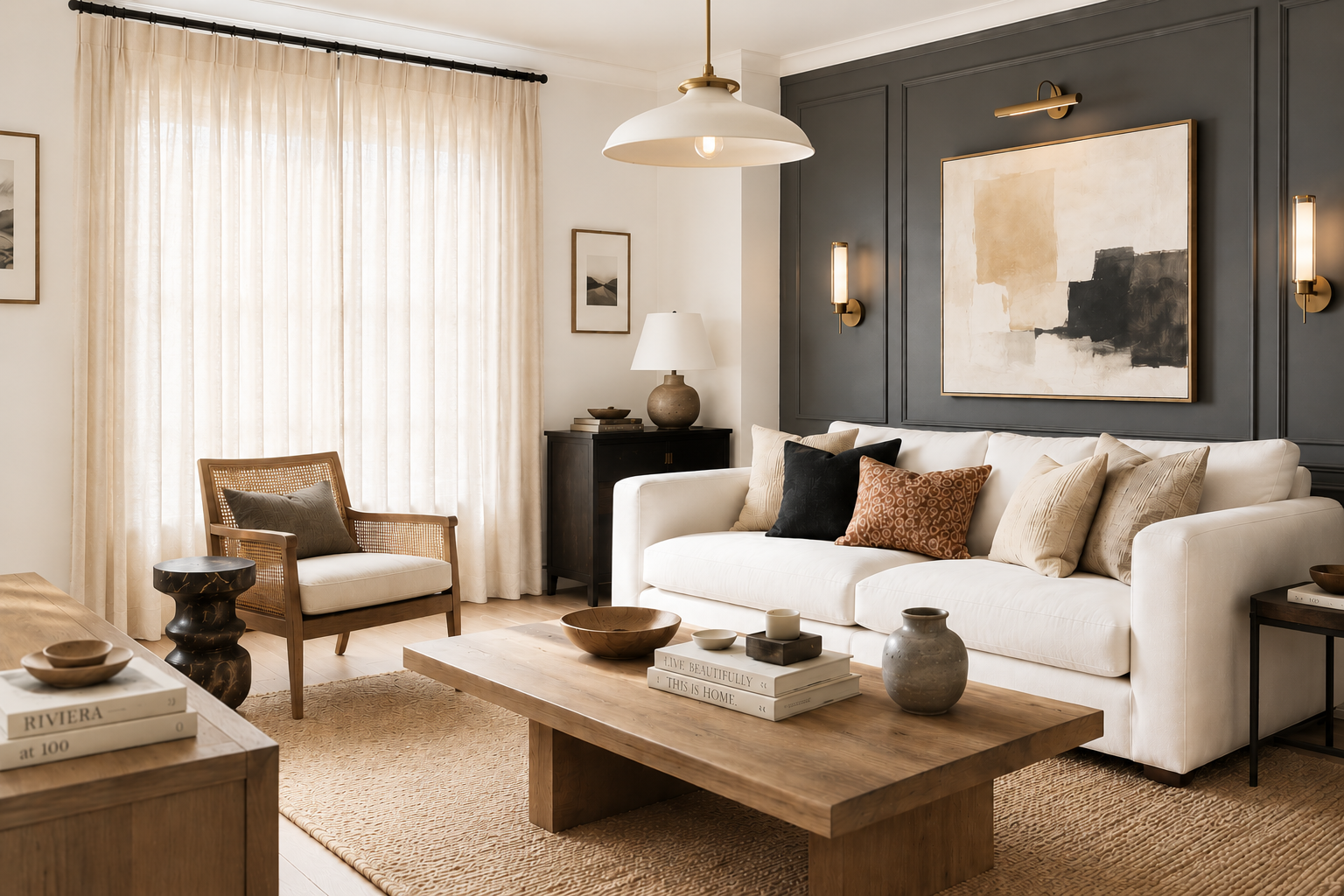
If you are changing curtain hardware, consider a rod that lets the panels clear more of the glass when open. Check wall construction and mounting instructions. The aim is a window that looks generous and still opens properly.
4. Switch on a lamp
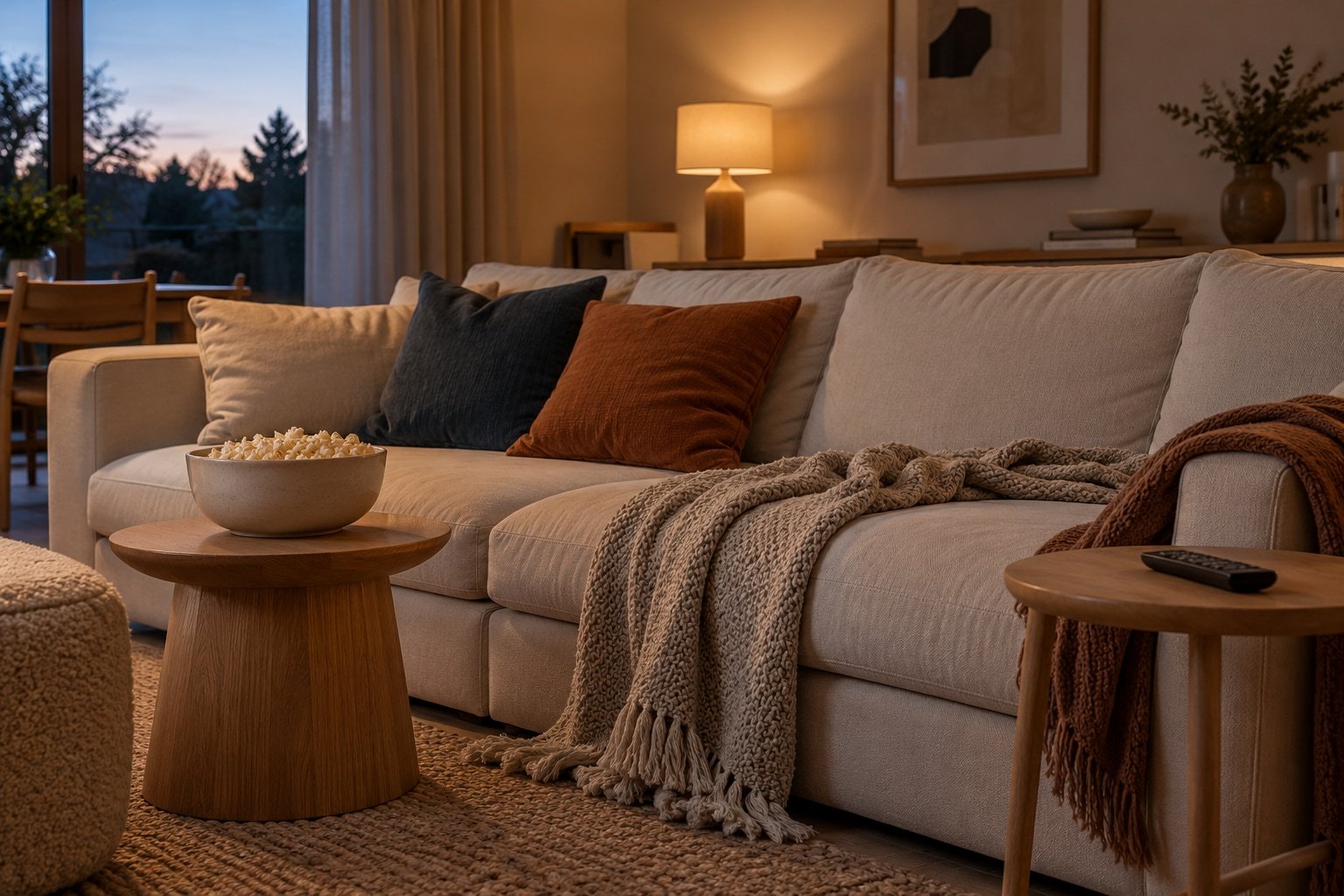
Try a table or floor lamp alongside the ceiling light. Coordinate bulb color where practical and stay within each fitting's rating. Evening lighting should help you relax, not suggest that the sofa is about to be questioned.
5. Repeat a few colors
Choose two or three colors already present in the room and echo them in small ways. A cushion can connect to a rug without being its identical twin. Repetition gives the eye somewhere familiar to return.
6. Mix the textures
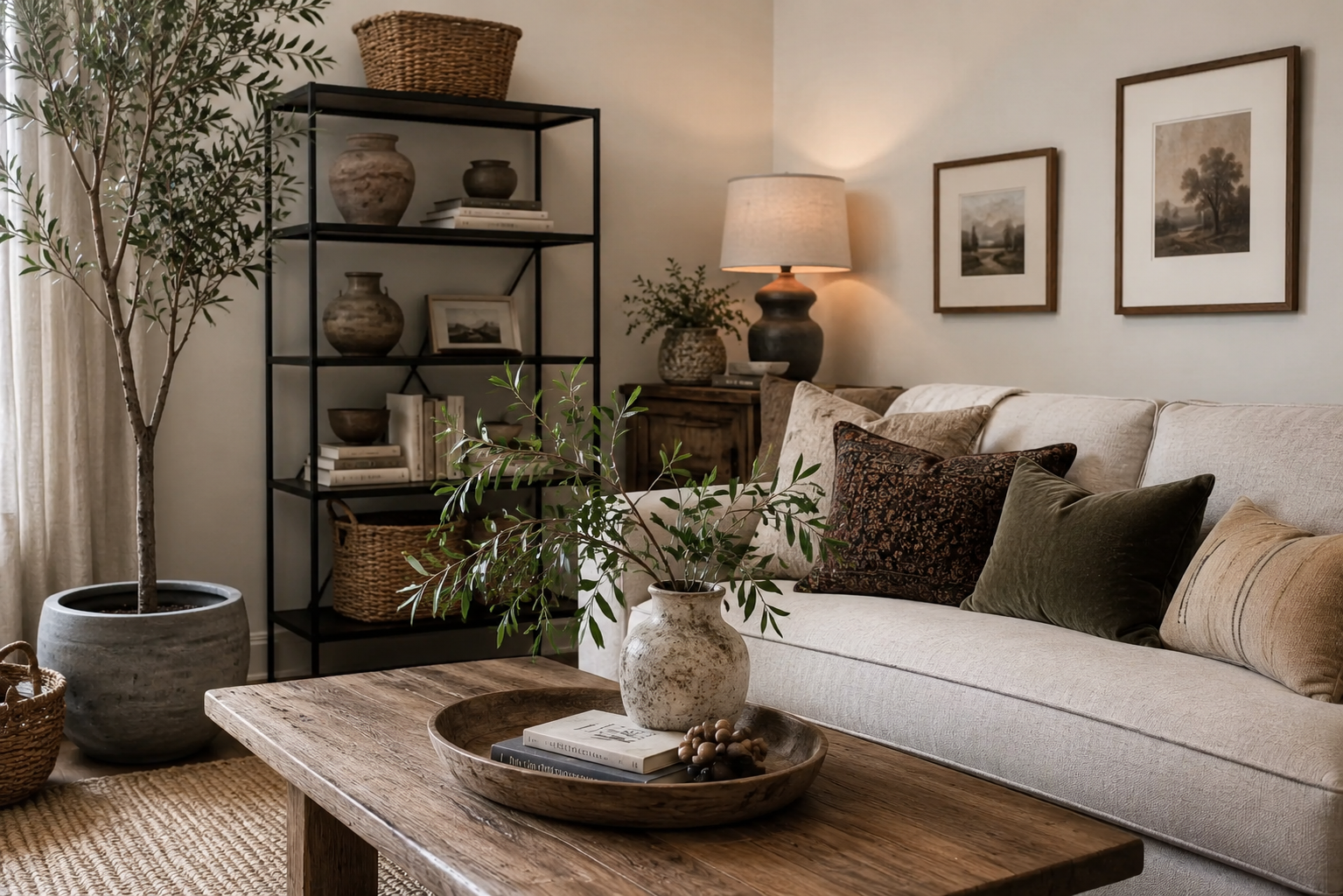
Pair smooth ceramics with woven fibers, or a soft throw with an older wooden table. Texture creates interest without demanding five more accent colors. You may already have enough variety in the cupboard.
7. Check the scale
Hold up paper templates before hanging art or ordering a mirror. Small objects can look lost on a large wall, but larger is not automatically better. Leave room for the object, the furniture below it, and the wall around it to make sense together.
8. Hide one practical distraction
Gather visible cables using a suitable organizer without restricting ventilation or access. Give the remote a home. Fix the detail that keeps catching your eye rather than trying to conceal every sign of electricity and family life.
9. Repair the small irritation
A crooked shade, loose handle, or tired cushion cover may be doing more visual damage than your very respectable sofa. Clean or repair what you can. Maintenance is not exciting content, but it is excellent decorating.
10. Keep something with a story
A family photograph, a secondhand bowl, or a drawing you love prevents a room from feeling like a display. Let it stay even if it does not obey the palette. The most interesting rooms leave some evidence of who lives there.
Choose the adjustment that costs the least and solves the clearest problem. Then take a seat and enjoy it before making another list. That last part is quite important.